





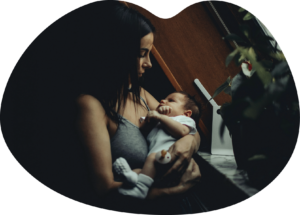
The postpartum journey is not always a straight line.
Katrina Vanderveen, Fortify Co-Owner
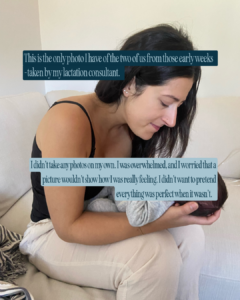
This is the only photo I have of the two of us from those early weeks — taken by a lactation consultant. If I scroll back through my phone, this is it. Not because those moments didn’t matter, but because I was barely surviving them. Before having my daughter, I followed so many moms who documented those early days — smiling, glowing, sharing perfectly imperfect moments that felt so Instagram-worthy. When I was in it, nothing in me wanted to take photos. I was overwhelmed, exhausted, and disconnected from the version of motherhood I thought I was supposed to feel. I worried any photo would look like a lie — a polished snapshot that didn’t match the heaviness I was carrying. There was nothing cute about crying around the clock or the chaos of my home, and I didn’t want to pretend everything was okay when it wasn’t. Now, with time, I wish I had more photos — not just for myself, but to show other moms that it’s normal when your reality doesn’t look like everyone else’s highlight reel.
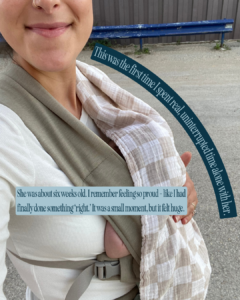
This photo marks the first real time I spent uninterrupted time alone with her. She was about six weeks old. For the first six weeks of my postpartum journey, I couldn’t be alone. The thought of caring for my daughter by myself — without help — felt paralyzing. I didn’t have the confidence or the energy to do it on my own. When my husband returned to work, I slowly began spending chunks of time alone with her. I remember this walk so clearly. I cried happy tears for most of it — proud of myself, relieved, and hopeful. It might look small from the outside, but inside it felt monumental. For the first time, the clouds felt like they were lifting, and I could finally imagine all the walks we would take together in the future.
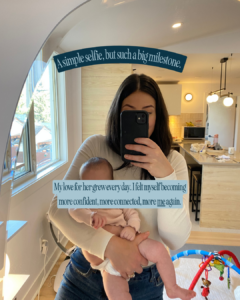
And then… us. A simple selfie, but such a meaningful milestone. In those early days, time felt distorted — days felt like years. But with each long day that passed, I felt closer to my daughter and more rooted in my role as her mom. My love for her didn’t arrive all at once; it grew slowly, day by day. I wrestled with comparison and envy toward moms who seemed to slip effortlessly into motherhood, and I asked myself more times than I can count, “Why doesn’t this feel natural for me?” Cue the mom guilt. But I trusted what others told me — that attachment would grow — and they were right. This photo represents growth, not perfection. Progress, not arrival.
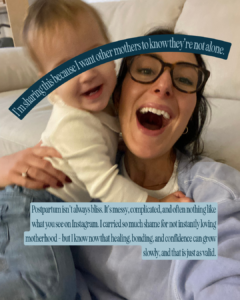
I’m sharing this because I want other mothers to know they are not alone. Postpartum isn’t always bliss. It’s messy, complicated, and often nothing like what you see on Instagram. I carried so much shame for not instantly loving motherhood, for struggling when I thought I should feel nothing but gratitude. What I know now is this: healing, bonding, and confidence don’t follow a timeline. They can grow slowly — and that is just as valid. 💛
At around three weeks postpartum, I found a therapist to walk this journey with me. I have met with my therapist almost every week since, and it has been one of the most healing decisions I’ve made. Through perinatal therapy, I was able to understand my postpartum depression, understand myself better — both as an individual and as a mom — and have a safe, open, unbiased space to share my thoughts, fears, hurts, wins, hopes, and everything in between. Therapy gave me language for what I was feeling and reminded me that I wasn’t broken — I was human.

At Fortify, we are so honoured to offer perinatal mental health therapy with Shayla Vechina, who specializes in supporting moms through pregnancy and postpartum. Shayla offers one-on-one therapy as well as a 5-week postpartum group therapy program designed for moms who want a supportive space to share, learn, and grow together. Creating space for honest conversations and real support for postpartum mothers is something we deeply believe in — because no mom should have to walk this journey alone. 💛

References:
1Carlson K, Mughal S, Azhar Y, et al. Perinatal Depression. [Updated 2025 Jan 22]. In: StatPearls [Internet]. Treasure Island (FL): StatPearls Publishing; 2025 Jan-. Available from: https://www.ncbi.nlm.nih.gov/books/NBK519070