



Understanding Addictions
Dopamine, dopamine, dopamine. Is that what comes to your mind when you think of addiction? Or perhaps you think of “willpower”? Would you believe me if addictions were much more than just dopamine and willpower?
Dopamine is a chemical messenger in the brain that signals reward and pleasure, motivating us to repeat behaviours that feel good. In addiction, this system can become overstimulated, making everyday activities feel less rewarding while cravings for the addictive behaviour grow.
All I knew about addictions was that alcohol, substances, and some behaviours (e.g., pornography, gambling) “hijacked” the dopamine system in the brain, causing an addiction. I was mostly wrong. I’ve now come to view addictions from a bio-psycho-social-cultural approach. This approach is a complementary blend of my neuroscience knowledge and counselling skills.
What is the Bio-Psycho-Social-Cultural Approach?
We are such complex creatures that it is often difficult to clearly define what aspects are in which category of the approach. Keep in mind this approach is to incorporate as many perspectives into a situation as possible, rather than categorize.
Bio
– Meaning “biology”
– What biological systems are involved?
Psycho
– Meaning “psychology”
– What thoughts, behaviours, and/or feelings are involved?
Social
– Referring to our relationships with people, objects, and places.
– Cultural – referring to our ethnic practices, belief systems, childhood experiences, and/or community values.
In session, using the bio-psycho-social-cultural approach might look like exploring your family and childhood experiences, noting any diagnoses and medications, reflecting on thoughts, feelings, and behaviours in a situation, and/or talking about every day life from habits, hobbies, and frequented places.

The Bio-Psycho-Social-Cultural Approach in Addictions.
In my understanding, a common belief in addictions relate to the biology of the individual – the dopamine. And it is absolutely true that the dopamine reward system is affected when consuming excessive amounts of alcohol and substances, or engaging in certain behaviours excessively (e..g, pornography, gambling). There is also evidence that there are certain genes can predispose people to addictions.
Psychologically, there are several theories of what causes and maintains an addiction. Physician Dr. Gabor Mate believes all addictions are caused from trauma, whether it be a car accident or emotional neglect as a child. People may use a form of addiction to cope with the pain. Other research has integrated grief and addictions. When viewing an addiction as the main mechanism to cope with life, you can imagine the discomfort, pain, and grief someone could experience during recovery. In my practice, I find it difficult to talk about an addiction without talking about trauma, grief, or other mental health concerns.
Johann Hari, writer and journalist, believes “the opposite of addiction is connection”. Humans have a peculiar ability to bond with anything. I’ve heard of people naming and talking to their robot vacuums (no shade!). I tell people I have an “emotional support water bottle”. Unfortunately, we can bond with something with short-term benefits and harmful long-term consequences. Addiction has also been called “a family disease”. One person’s addiction affects their relationships with friends, family members, and coworkers. A common path of addiction starts with parties then leads to using alone. Addiction is a very lonely place. Finding ways to repair relationships and trust is a long road.
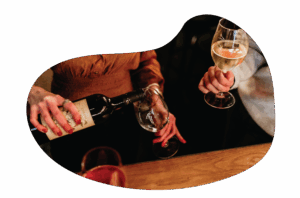
In a cultural perspective, each ethnicity, household, classroom, workplace, or group of friends have their own culture. In many cultures, a glass of wine at dinner is common. Next time you’re watching TV or out around town, count how many ads you see for alcohol. Other communities lack education or supportive environments. Sometimes it is “getting in with the wrong crowd”. But then we should take a bio-psycho-social-cultural analysis of what it means to be “the wrong crowd”.
Keep these perspectives in mind when talking about addictions. There is unlikely to be one true cause to an addiction. Life is as complex as people’s stories. Being more understanding, empathetic, curious, and patient goes a long way to support someone.
A note on the holidays
We wish for the holidays to always be merry and bright. For some families it is the hardest time of the year. The holidays can be overwhelming, unmanageable, or even heartbreaking. Families may have to consider other factors such as safety and triggers.
I encourage you to reflect on the following questions:
– What’s one of the first things a host offers you when you sit down?
– How many parties, holiday celebrations, or other events involve alcohol compared to ones with no alcohol?
– How many stories of the “good ol’ days” mention using substances?
– How many stories are funny, ridiculous, or unbelievable because of someone being under the influence?
If you or a loved one are struggling around the holidays, we can find ways to help you cope. Strategies might include developing and maintaining boundaries, having a safety plan, exploring triggers, improving communication, and/or finding new ways to navigate a new lifestyle.
If you or someone you love is struggling with an addiction, there is support waiting for you.